
With the growth of cross-border e-commerce, overseas marketing, and web data scraping, more and more enterprises are paying close attention to their network connectivity methods. While proxy IPs allow users to access target websites through various network exit points, "proxy chaining" offers an alternative approach to connectivity.
So, what exactly is proxy chaining? What are its advantages, and how can it be utilized in cross-border business operations? This article explores the concept by covering its working mechanism, application scenarios, and key considerations for practical use.
What Is Proxy Chaining? Understanding the Basic Concept
Proxy chaining refers to the practice of linking multiple proxy servers together in a specific sequence. Network requests are routed through these various proxy nodes in succession before finally reaching the target website.
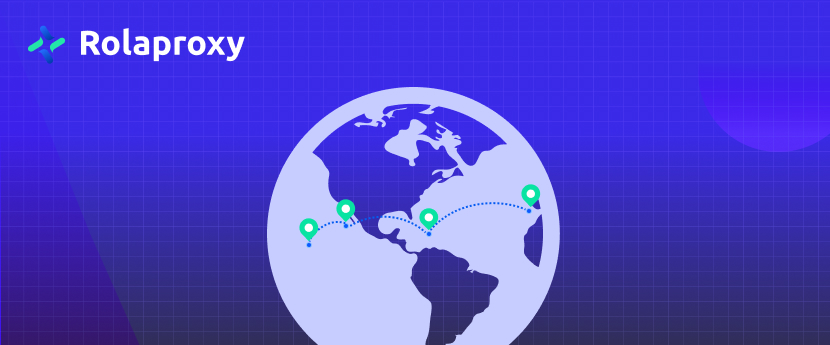
Unlike a standard proxy setup—where a request is typically forwarded through a single node—proxy chaining allows for the use of multiple nodes based on specific configurations. For instance, a user's network request might pass through Proxy A, then Proxy B, with Proxy B ultimately accessing the target website.
In this scenario, the target website generally sees the exit IP of the final proxy node rather than the user's original IP address.
It is important to note that proxy chaining does not guarantee absolute anonymity, nor does it necessarily improve network speed. The actual performance depends on the quality of the proxy nodes, the connection method, and the specific configuration.
How Does Proxy Chaining Work?
Understanding the workflow of proxy chaining helps users determine whether it aligns with their specific business requirements.
Step 1: Initiating the Request. The user accesses a target website via a browser, data scraping tool, or other application.
Step 2: Entering the Proxy Node. The network request first reaches the initial proxy server. Based on pre-set rules, this node forwards the request to the next proxy node in the chain.
Step 3: Sequential Forwarding. If multiple proxy servers are configured, the request continues to be passed along according to the established sequence.
Step 4: Accessing the Target Website. The final proxy node sends the request to the target website and receives the returned data.
This process allows users to customize their network access path to suit their specific needs. However, a greater number of proxy nodes generally increases the complexity of the connection and may lead to higher network latency. Therefore, when configuring proxy chains, stability and compatibility should be prioritized.
What Are the Advantages of Proxy Chaining?
When used appropriately, proxy chaining can provide greater flexibility for certain types of network access tasks.
1. Flexible Adjustment of Network Egress
Different proxy nodes may correspond to distinct network environments. By properly configuring chained proxies, users can adjust the request forwarding path based on business needs to meet specific connectivity requirements.
2. Adaptation to Various Business Scenarios
Cross-border e-commerce, overseas market research, and public web data scraping all have different requirements for network connectivity. Chained proxies offer a viable solution for operations that necessitate multi-node forwarding.
3. Compatibility with Various Types of Proxy IPs
"Chained proxies" refer to a method of connection, whereas residential proxy IPs and datacenter proxy IPs refer to specific types of proxy resources. Provided that the service provider and network protocols support it, users can select the optimal combination of nodes to suit their requirements.
It is important to note that the effectiveness of chained proxies depends on the specific configuration. They do not automatically resolve issues such as IP bans, access restrictions, or network instability.
How Are Chained Proxies Applied in Cross-Border Operations?
Chained proxies can be utilized in cross-border operations that require flexible control over network paths; however, not every task necessitates the use of multiple proxy nodes.
Cross-Border E-Commerce: When managing overseas operations, businesses may need to access websites in various regions to monitor product pricing, product details, and market shifts. Selecting the appropriate proxy egress based on business needs can assist teams in conducting such research.
Overseas Market Research: Businesses can leverage proxy IPs to access websites in different regions, gaining insights into local product information, search results, and market trends. For tasks requiring multi-node forwarding, one can evaluate whether a chained proxy setup is appropriate.
Web Data Scraping: When scraping public web data, some websites may impose access restrictions based on access frequency, IP addresses, or request behavior. Judicious use of proxy IPs, control over request frequency, and adherence to website rules can help enhance the stability of the data scraping process.
What Is the Difference Between Chained Proxies and Residential Proxy IPs?
While chained proxies and residential proxy IPs are frequently discussed together, they refer to different concepts.
A "chained proxy" describes the connection method between multiple proxy nodes, whereas a "residential proxy IP" describes the specific type of proxy resource. Simply put, one focuses on *how* a request is routed, while the other focuses on the *type* of IP address being used. For example, RolaProxy offers residential proxy IP resources covering over 195 countries and regions, with support for HTTP(S) and SOCKS5 protocols. Users can select the appropriate proxy solution based on their target region, network requirements, and specific business use cases.
If you intend to use a residential proxy IP as a node within a proxy chain, you must first verify that the service provider supports the necessary forwarding and connection configurations.
Summary
Proxy chaining—routing network requests sequentially through multiple proxy nodes—offers a more flexible connectivity method for specific network scenarios. While it can be useful for certain cross-border operations, overseas market research, and web data scraping, it may also introduce increased latency and configuration complexity.
When selecting a proxy solution, it is advisable to first clarify your actual requirements, then evaluate factors such as IP type, network stability, protocol compatibility, and costs. For standard cross-border business activities, choosing the right proxy IP is often more practical than simply adding more proxy nodes.
FAQ
1. What is a proxy chain?
A proxy chain involves connecting multiple proxy servers in a specific sequence, allowing network requests to pass through several nodes before reaching the target website.
2. Can proxy chaining improve network speed?
Not necessarily. Using multiple proxy nodes can actually increase network latency; the actual speed depends on the quality of the nodes, the network path, and the configuration.
3. Is proxy chaining suitable for cross-border e-commerce?
Proxy chaining can be helpful for cross-border operations that require flexible adjustments to network exit points. However, for routine tasks like product research or general website browsing, using a single, suitable proxy IP is usually sufficient.
4. Can residential proxy IPs be used in a proxy chain?
Yes, provided the service provider supports the necessary connection configurations. Before proceeding, ensure that the protocols are compatible and verify the forwarding rules.
5. What should I keep in mind when using a proxy chain?
You should pay attention to network latency, node stability, protocol compatibility, and data security. Additionally, ensure compliance with the target website's access rules to avoid disrupting your business operations due to improper configuration.