
At its core, web scraping involves using programs to automatically retrieve, parse, and organize information from public web pages into usable data. While the process may appear simple, it actually entails multiple stages: sending requests, proxy forwarding, handling page responses, parsing content, and storing data. Residential proxies play a crucial role in this workflow, directly influencing access success rates and data retrieval efficiency.
Taking a residential proxy service like RolaProxy as an example, it primarily addresses issues regarding "access identity" and "access stability" within this process.
The Basic Workflow of Web Scraping
A complete web scraping operation typically involves: identifying the target URL, sending an HTTP request, receiving the response, parsing HTML or JSON, extracting specific fields, cleaning the data, and storing it in a database. While simple pages may yield data with a single request, the logic becomes more complex for pages requiring logins, pagination, asynchronous loading, or those subject to geo-restrictions. In such cases, whether a request mimics the behavior of a real user directly determines the ability to consistently retrieve data.
Why Web Scraping Requires Residential Proxies
Target websites often detect bots by analyzing factors such as IP request frequency, access patterns, request headers, and device fingerprints. Data center IPs, characterized by their concentrated sources and distinct signatures, are easily rate-limited or blocked. In contrast, residential proxies originate from genuine home networks; they offer diverse IPs and authentic geographic locations that closely resemble the browsing environments of ordinary users. Consequently, they hold a distinct advantage for high-frequency scraping, geo-specific data collection, and accessing sites with strict security measures.
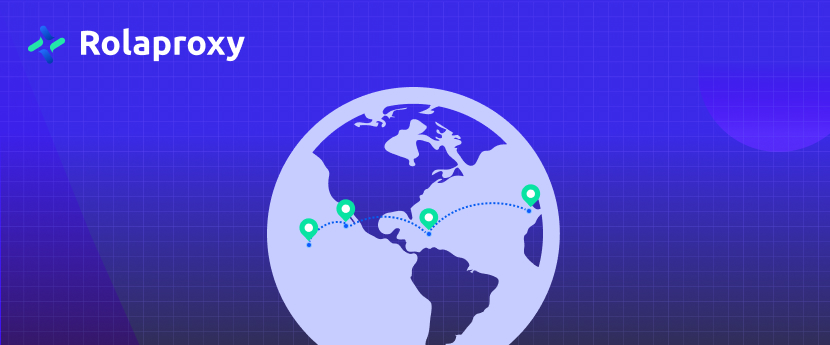
Residential proxy platforms like RolaProxy aggregate residential IP resources from various regions, making them available for users to access via APIs or a dashboard. For web scraping, the value lies in ensuring that requests do not all originate from a single server but are instead routed through residential IPs across different locations. This approach minimizes the risk of being blocked and increases the success rate of page access.
How to Use Residential Proxies: From Access to Data Retrieval
The first step is selecting the appropriate proxy type. Dynamic residential proxies are ideal for scraping tasks requiring frequent IP rotation, whereas static residential proxies suit scenarios where maintaining a logged-in state or a consistent identity is necessary. The second step involves configuring authentication; common methods include IP whitelisting and username/password authentication. Finally, the third step is setting a rotation strategy—options include rotating IPs based on requests, time intervals, or sessions. The fourth step involves handling responses; when encountering CAPTCHAs, 403 errors, or 429 rate-limiting errors, you must employ strategies such as retries, rate throttling, IP rotation, and request header optimization.
When using services like RolaProxy, you typically need to define your target site, scraping frequency, geographic requirements, and session needs. You then choose between dynamic or static residential proxies and integrate them into your crawler via API extraction or username/password authentication. Maintaining session persistence is crucial during the scraping process. For instance, tasks like tracking e-commerce prices, navigating paginated search results, or accessing user account data often require continuous access from the same IP address. Changing the IP for every request could invalidate login sessions or lead to data inconsistencies. Therefore, you should balance the use of sticky sessions and dynamic rotation based on your specific business needs.
Keys to Improving Data Acquisition Efficiency
Beyond proxy usage, scraping efficiency depends on concurrency control, timeout settings, retry mechanisms, and parsing rules. Higher concurrency isn't always better; excessive concurrency can trigger security controls, while too little hampers efficiency. It is advisable to start with low-volume testing—monitoring success rates, latency, and blocking rates—before gradually scaling up. Additionally, properly configure request headers such as User-Agent, Referer, and Cookie to avoid having overly uniform request characteristics.
Regarding proxy strategy, platforms like RolaProxy facilitate integration across various scraping tasks by supporting features such as geographic filtering, session control, and API extraction. For example, regional price monitoring requires city-specific IPs, SEO ranking tracking requires simulating searches from different locations, and ad verification requires a genuine residential network environment. During the data parsing phase, design fault-tolerant rules to handle changes in page structure. Prioritize API access whenever possible; when HTML parsing is unavoidable, use stable selectors and implement robust error logging. Finally, before storing data in your database, perform deduplication, data completion, and validation to ensure high data quality.
Compliance Is the Bottom Line
Web scraping must adhere to the target website's terms of service, the robots protocol, and local laws and regulations. Residential proxies are merely technical tools; services like RolaProxy must not be used to bypass authorization, steal private information, launch malicious attacks, or engage in high-frequency harassment. Scraping in a legal, restrained, and controlled manner is essential for long-term business stability.
In summary, web scraping encompasses the entire process chain, from initial access to final data acquisition. Residential proxies play a key role in diversifying sources, simulating real users, and boosting success rates. True improvements in scraping efficiency and data value come from selecting the right proxies, configuring effective strategies, managing pacing, and ensuring compliance.
FAQ
Q1: Are residential proxies mandatory for web scraping?
Not necessarily. If the target site has lenient security controls and request frequency is low, datacenter proxies or even direct connections may suffice. However, residential proxies are usually better suited for high-frequency, cross-region, or strictly protected scraping tasks.
Q2: How do I choose between dynamic and static residential proxies?
Choose dynamic proxies when you need frequent IP rotation and want to minimize the risk of being blocked. Choose static proxies when you need to maintain a logged-in state, a fixed identity, or long-term sessions.
Q3: What scraping scenarios are residential proxies like RolaProxy suitable for?
They are ideal for scenarios requiring genuine residential IPs and broad geographic coverage, such as regional price monitoring, SEO ranking tracking, ad verification, e-commerce data collection, and scraping public social media information. It is best to conduct small-scale tests to verify specific performance.
Q4: Why do I still get blocked even when using residential proxies?
Possible reasons include excessive request frequency, anomalous request headers, non-human-like behavior, poor IP pool quality, or upgraded security measures on the target site. You may need to adjust your rotation, concurrency, and request strategies.
Q5: How can I use residential proxies and RolaProxy in a compliant manner?
Adhere to website terms of service, robots protocols, and local laws. Avoid scraping private data, bypassing authorization, or engaging in malicious attacks or harassment. Control request frequencies and respect website rules.