
For businesses engaged in overseas marketing, Facebook advertising serves as a vital channel for expanding into international markets. When running ads in different regions, some marketers use Facebook proxy IPs. They do this to check what web pages look like in a target location, or to keep their daily internet connection more stable.
However, having a larger number of proxy locations is not necessarily better. Choose your proxy based on your target markets, network stability and ad needs. This post covers how to pick proxy locations for Facebook ads and the uses of different proxies.
I. What Is the Purpose of a Facebook Advertising Proxy?
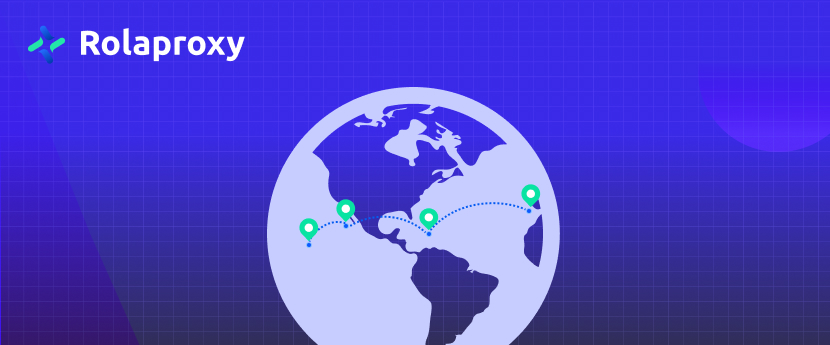
A Facebook proxy IP lets you connect to the internet via another exit IP. You can then check how web pages load for users in a specific location.
For example, if you sell cross-border products to US customers, you may need to see how local users view your product pages, promotions and ad landing pages.Using a U.S.-based proxy IP can facilitate such testing.
It is important to note that a proxy IP does not automatically change the target audience for your ads. The geographic targeting for your advertisements must still be configured within Meta Ads Manager.
II. How to Choose Locations for Facebook Advertising Proxies
1. Select Proxy Locations Based on Your Target Market
When choosing a Facebook proxy, first identify the markets your business serves.
If your primary focus is on U.S. customers, consider using U.S.-based proxy IPs. If your operations extend to Vietnam, the U.K., or other countries, select proxy locations that align with your needs for testing local web content.
While matching the proxy location to your target market helps maintain a consistent network environment, it does not guarantee that your account will be exempt from security verification checks.
2. Distinguish Between Proxy Locations and Ad Audience Locations
These are two concepts that are frequently confused in ad operations.
A proxy IP location refers to the exit point of your network connection, whereas the ad audience location determines which users you intend to reach with your advertisements.
For example, using a U.S. proxy IP does not mean your ads will automatically be shown to users in the U.S. You must still specify the target country or region within your ad set settings and verify the actual reach of your campaigns.
3. Ensure Network Stability
Frequently switching between network exit points in different countries can cause your login environment to appear unstable.
For advertising operations that require long-term management, it is advisable to establish a stable network connection tailored to your specific operational regions and to enable two-factor authentication (2FA). When you encounter an "unusual login" alert, you should first check your account security notifications and login history.
III. How to Choose Between Static and Dynamic Residential Proxies?
When selecting a proxy for Facebook, consider whether you need your IP address to remain constant.
Static residential proxies are generally suitable for scenarios requiring the use of the same exit IP over an extended period—for example, when testing web pages for a specific region or maintaining consistent access to a business backend. Before choosing, verify that the service supports the necessary "session persistence" (sticky session) features.
Dynamic residential proxies typically allow for IP rotation based on your configuration. These are well-suited for tasks such as scraping public web data across multiple regions, price monitoring, and market research.
If your primary use case is daily ad management, prioritize connection stability and session continuity. If you need to conduct data collection across various regions, you may want to evaluate the rotation rules offered by dynamic proxies.
Regardless of the proxy type you choose, there is no guarantee that you will completely avoid CAPTCHAs, account restrictions, or ad review processes.
IV. How to Optimize Facebook Ad Location Settings?
First, check the geographic targeting settings for your ad sets in Meta Ads Manager to ensure the delivery scope aligns with your actual business plan.
Second, confirm that the exit location of your proxy IP meets your web-testing requirements. If you experience connection failures or are unable to access a page, check your proxy configuration, network status, and the access policies of the target website.
Third, minimize unnecessary switching between regions and manage account permissions effectively. Team members should follow standardized account management procedures to avoid the security risks associated with sharing login credentials.
Finally, ensure compliance with Meta’s advertising policies. Proxy IPs are merely tools for network connectivity; they cannot replace proper ad account management, nor should they be used to circumvent platform restrictions.
V. Rolaproxy-Best proxies for facebook ads
For teams engaged in overseas marketing or multi-region market research, a suitable proxy service can help manage network exit points across different locations.
Rolaproxy offers residential proxy IP services covering over 195 countries and regions, with support for both HTTP and SOCKS5 protocols. Users can evaluate the best proxy solution for their business by considering factors such as target markets, session requirements, connection stability, and traffic costs.
It is recommended to conduct practical testing before full-scale deployment to ensure that your proxy configuration aligns with your business needs. Please note that proxy IPs cannot guarantee advertising performance, nor can they, on their own, determine the security status of an account.
VI. Frequently Asked Questions (FAQ)
1. Is a proxy IP required for running Facebook ads?
Not necessarily. If your current network setup meets your operational needs, there is no strict requirement to configure an additional proxy. Proxies are primarily useful in scenarios where specific geographic access or network management is required.
2. Does the geographic location of a Facebook proxy IP affect the ad audience?
A proxy IP does not directly determine your ad audience. The target country or region for your advertisements must be specified separately within Meta Ads Manager.
3. Which type of residential proxy is suitable for Facebook advertising?
If you need to maintain a consistent exit IP over a long period, consider using static residential proxies. If you need to rotate exit IPs—for instance, to collect data across multiple regions—consider using dynamic (rotating) residential proxies.
4. Why do CAPTCHAs still appear even when using a residential proxy?
Platforms often evaluate multiple factors, such as login location, device information, and account behavior. Using a residential proxy does not guarantee the avoidance of CAPTCHAs or other security checks.
5. What should I look for when choosing a proxy service for Facebook advertising?
Key factors to consider include geographic coverage, connection stability, session management, protocol compatibility, and cost. Ensure that the service is well-suited to your specific business requirements.