
With the growth of sectors such as e-commerce, SEO, market research, and price monitoring, web data scraping has become a vital method for businesses to gather market intelligence.
However, large-scale data collection often leads to issues such as high request frequency, IP blocks, access failures, and "429 Too Many Requests" errors. Residential proxy IPs have emerged as a common solution to these challenges.
So, what exactly is a residential proxy IP, and why is it necessary for data collection?
What is a residential proxy IP?
A residential proxy IP is an IP address assigned by a genuine residential internet service provider (ISP). Unlike standard data center IPs, residential IPs typically mirror the network environment of real users.
When a user accesses a target website via a residential proxy, the site sees the residential IP provided by the proxy server rather than the user's actual IP address.
In short, residential proxy IPs assist data collection processes by:
Rotating access IPs
Hiding the original IP
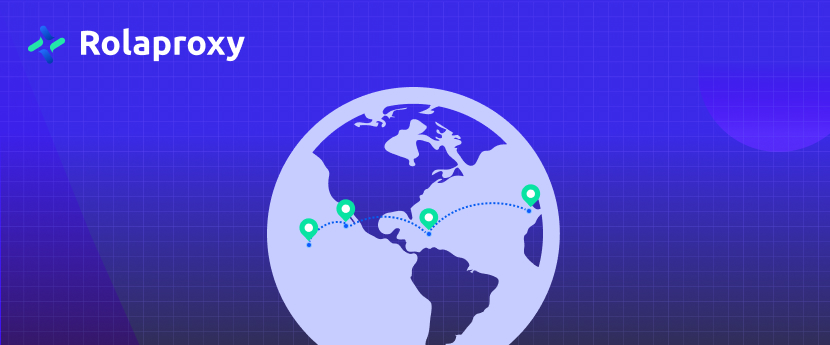
Allowing selection of specific countries or regions as needed
Mitigating restrictions caused by frequent access from a single IP
Improving the stability of certain data scraping tasks
Consequently, residential proxy IPs are frequently used in scenarios such as web scraping, SEO monitoring, e-commerce data collection, price monitoring, and market research.
Why are residential proxy IPs needed for data collection?
During web data collection, a high volume of requests originating from a single IP address can easily trigger access restrictions on the target website.
For instance, consider a program designed to collect a large number of product prices. If all requests utilize the same IP and generate a high volume of traffic in a short period, the following sequence may occur:
Requests are restricted → A 429 error is returned → The IP is temporarily blocked → The data scraping task is interrupted.
Residential proxy IPs allow for techniques like IP rotation, distributing a large volume of requests across various IP addresses and preventing traffic concentration on a single IP.
This is particularly crucial for projects requiring continuous data collection.
Which data collection scenarios are suitable for residential proxy IPs?
Residential proxy IPs are not limited to a single type of business; common application scenarios include the following:
1. E-commerce data collection
Collecting data on product prices, inventory levels, product details, and competitor information via proxy IPs enables businesses to conduct market analysis and price monitoring.
2. SEO Data Collection
SEO tools often need to retrieve search results from various locations. If all requests originate from a single IP address and region, the collected data may not accurately reflect search conditions across different areas.
Residential proxy IPs allow businesses to select IPs from specific countries or regions based on their operational needs.
3. Price Monitoring
For enterprises that need to continuously monitor prices across multiple websites, high volumes of requests may trigger restrictions from target sites. Judicious use of residential proxy IPs helps maintain the continuity of data collection tasks.
4. Market Research
Enterprises can leverage publicly available web data to gain insights into products, pricing, and market trends across different regions, thereby supporting market analysis.
What Are the Advantages of Residential Proxy IPs?
Compared to data scraping using a single IP address, residential proxy IPs offer the following key advantages:
Abundant IP resources.
Different IPs can be used for different tasks, preventing a high volume of requests from being concentrated on a single IP.
Support for IP rotation.
For data scraping tasks requiring large numbers of requests, IP rotation strategies can be configured to meet specific collection needs.
Support for geographic targeting.
Some residential proxy services allow for IP selection at the country, region, or even city level, making them ideal for projects requiring regional data analysis.
Suitable for long-term data collection.
For projects requiring continuous operation—such as e-commerce data monitoring or SEO tracking—stable proxy IP resources help minimize task interruptions caused by IP restrictions.
What Should You Consider When Choosing Residential Proxy IPs?
Not all residential proxy IPs are suitable for data collection. When selecting a proxy service, consider the following aspects:
IP coverage: Availability of IP resources in target countries and regions.
IP quantity: Whether the IP resources can meet the demands of large-scale data scraping.
IP rotation: Support for automatic rotation and the ability to adjust rotation strategies based on business needs.
Stability: Proxy connection speed, success rate, and IP availability all impact data scraping efficiency.
Protocol support: Compatibility with protocols such as HTTP, HTTPS, or SOCKS5, depending on the requirements of your scraping tools.
Price: Beyond the cost per GB, consider factors such as IP quality, stability, and actual availability.
Conclusion
For users engaged in large-scale web data collection, residential proxy IPs can serve as a vital component of their data collection infrastructure. It offers a rich pool of IP resources and supports IP rotation and geographic targeting, making it suitable for use cases such as web scraping, e-commerce data collection, SEO, price monitoring, and market research.
However, residential proxies are not a one-size-fits-all solution for every data collection challenge. Effective implementation requires a strategic setup that considers factors such as scraping frequency, the target website, request volume, IP rotation policies, and the specific data extraction tools being used.
If your project involves long-term web data collection, it is recommended to first conduct small-scale tests to verify the proxy's stability and performance before selecting a plan that aligns with your business needs.
FAQ
1. What is a residential proxy?
A residential proxy is an IP address sourced from a residential network environment. When a user accesses a website through a residential proxy, the target site sees the proxy's IP address rather than the user's actual IP address.
2. Are residential proxies suitable for web scraping?
Yes. Residential proxies are commonly used for web data collection, SEO, e-commerce data gathering, price monitoring, and market research. However, actual performance depends on factors such as the target website, scraping frequency, and the quality of the proxy itself.
3. Can residential proxies resolve "429 Too Many Requests" errors?
Residential proxies can mitigate restrictions caused by frequent requests from a single IP by utilizing IP rotation and request distribution; however, they cannot guarantee the complete elimination of 429 errors. Properly managing request frequency remains crucial.
4. What is the difference between residential proxies and datacenter proxies?
Residential proxies originate from residential network environments, whereas datacenter proxies come from servers in data centers. They differ in terms of IP source, pricing, speed, stability, and use cases; the choice depends on the specific requirements of the data extraction task.
5. Should I choose dynamic or static residential proxies for data collection?
If your task requires frequent IP changes, dynamic residential proxies are generally a good option; if you need to maintain the same IP address for an extended period, static residential proxies are preferable. The choice should be based on the IP stability requirements of your specific scraping task.